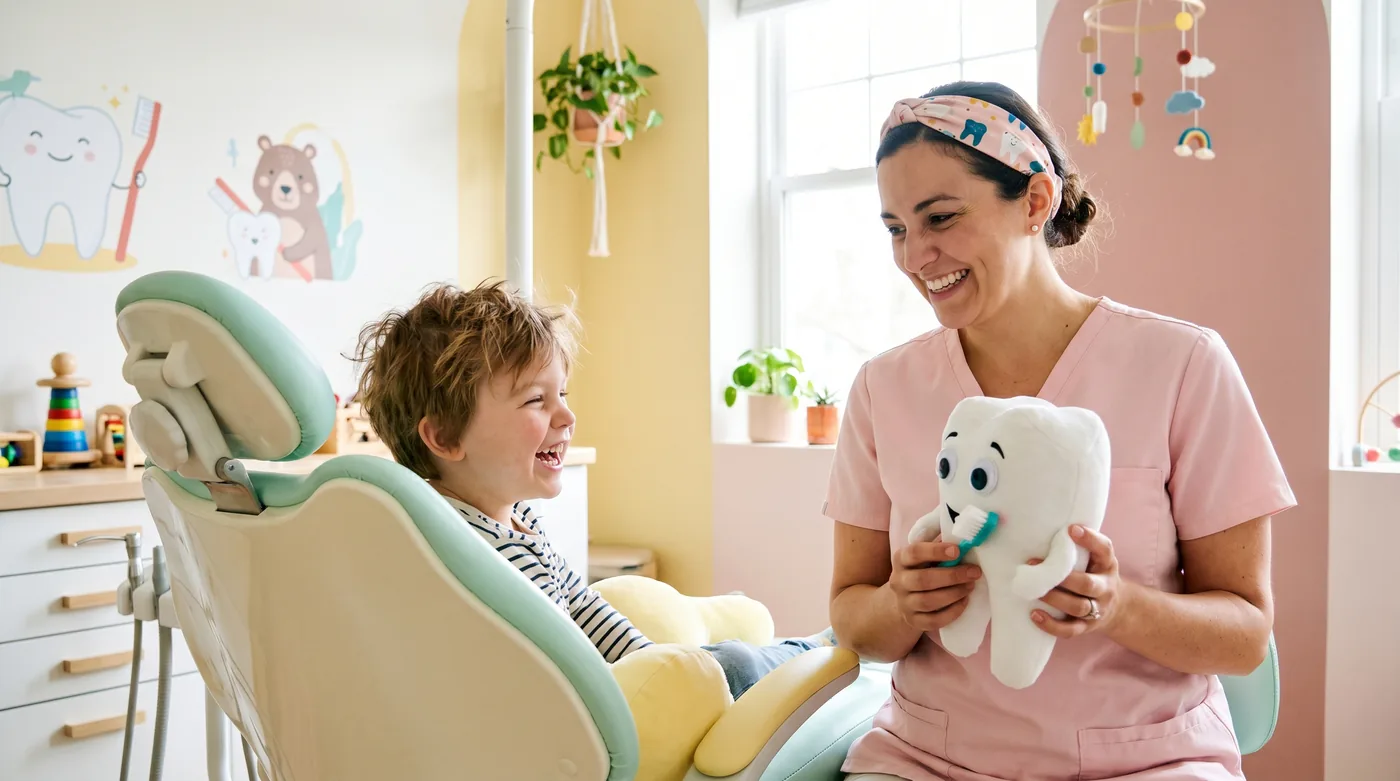
A child's first dental visit is crucial for building trust. In a welcoming, pressure-free environment, the child gets to know the space, instruments and team at their own pace — with no invasive treatments. The goal is for them to stay curious, not anxious.
Professional hygiene, fluoride application and fissure sealants to protect permanent teeth. Evaluation of bone and dental growth, with early detection of possible bite problems. Regular check-ups every 6 months from the eruption of the first tooth.

When needed, we carry out treatments with techniques adapted to the child's age and level of cooperation — from fillings of baby teeth to planned extractions. We use positive language and behavioural reinforcement so each appointment is a pleasant experience.

The first visit is a moment to build trust. We respect each child’s pace so they come to the dentist without fear.
What is itPaediatric dentistry supports the child's oral development from the first baby teeth through to permanent dentition. Prevention, oral hygiene education and adapted treatments with an approach that makes the dentist a positive reference — not a source of anxiety.
Recommended for
Click on the profile to learn about their qualifications and clinical approach.
Ideally when the first baby tooth erupts — usually between 6 and 12 months of age. An early appointment allows us to evaluate oral development and establish a positive relationship with the dentist from the start.
Yes. Baby teeth are essential for chewing, speech and providing the space that permanent teeth need to erupt properly. Untreated decay in baby teeth can affect the permanent teeth developing beneath.
They are a protective varnish applied to the fissures of permanent molars immediately after eruption. They fill the grooves where toothbrushes cannot reach, reducing the risk of decay by over 80%. It is quick, painless and uses no drill.
The first appointment is always an adaptation visit — with no invasive procedures. Our team uses the "tell-show-do" technique to familiarise the child with the instruments and environment before any treatment. Most children feel comfortable by the second or third visit.
Yes, safely. Paediatric X-rays are taken with lead aprons and low-radiation equipment. We only request them when there is a clinical indication — not as routine — and the dose is minimal and safe.
Fill in the form and our team will get in touch within 24 hours to confirm your appointment.